Microinverters vs String Inverters Which One Fits Your Roof
October 5, 2026
QUICK ANSWER: A string inverter is one central box that converts the power from a whole row of panels at once, while microinverters sit under each panel and convert power right where it is made. Microinverters tend to fit roofs with several angles, partial shade from live oaks or chimneys, or plans to add panels later. String inverters tend to fit simple, open roofs where every panel sees the same sun. In Central Texas, heat, hail, and roof layout all matter, so the right choice depends on your actual roof, not a general rule.
A homeowner in Boerne stands in the driveway at four in the afternoon in late July, phone in hand, watching the solar app. Half the panels on the east side of the house are cooling off in the shade of a big live oak, and the production graph for the whole system sags in a way that does not match the bright, cloudless sky overhead. The panels are fine. The wiring is fine. What the graph is really showing is how the system was designed to turn sunshine into usable power, and that design choice was made years ago, when someone decided what kind of inverter would sit behind the panels.
That choice rarely gets the attention it deserves. Panels get the glamour, but the inverter decides how every panel on your roof behaves as part of a team. Here in the Hill Country and around San Antonio, where roofs come with odd angles, mature trees, chimneys, dormers, and a sun that bakes everything from May through September, the difference between a microinverter system and a string inverter system shows up in real ways. This guide walks through how each one works, where each one shines, and how to think about your own roof.
What an Inverter Actually Does
Solar panels produce direct current, the kind of power a battery gives off. Your home, the utility grid, and nearly everything you plug in run on alternating current. The inverter is the translator between the two. Without it, the electricity from your roof would be of no use to your home.
The Conversion Job
Every inverter converts direct current from solar panels into alternating current your home can use. It continuously monitors the panels and grid, adjusting output as sunlight changes.
The Monitoring Role
Modern inverters also report system production, providing the numbers displayed on monitoring apps. When you view a production graph, you are essentially seeing the inverter’s performance data.
The Two Basic Designs
The main difference is where conversion occurs. String inverters handle conversion centrally near the electrical panel, while microinverters perform it individually at each panel on the roof.
How a String Inverter System Works
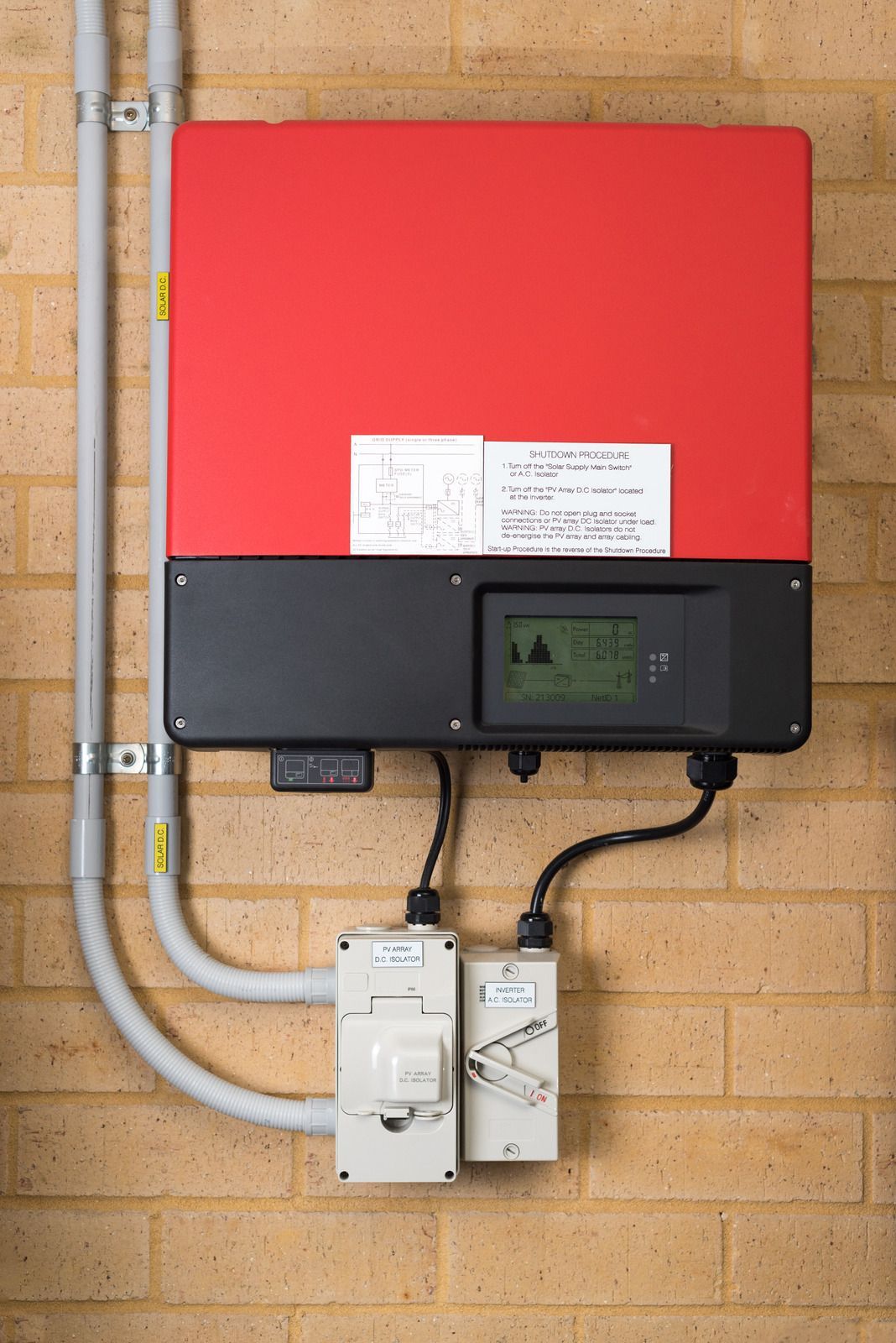
In a string design, panels are wired together in a series, like holiday lights, forming one or more strings. The combined direct current runs down to a single inverter, which converts all of it at once.
The Strengths
String inverters are mature and widely understood. One main box handles installation, monitoring, and service. Because it sits near ground level, technicians can access it without climbing onto the roof.
The Tradeoff Of Series Wiring
Panels in a string share one electrical path, so shading, dirt, or damage affecting one panel can reduce the string’s output. String systems perform best when panels receive similar sunlight.
The Single Point Of Failure
If the central inverter fails, the entire system stops producing until repaired or replaced. This centralized design simplifies servicing, but summer heat can be an important consideration for electronics.
How a Microinverter System Works
A microinverter is a small inverter attached to the back of each panel, or sometimes shared between two panels. Each panel converts its own power right on the roof, and the alternating current from all of them is combined and sent to your home.
Each Panel Works On Its Own
Each panel has its own inverter, so shading or underperformance affects only that panel. Other panels receiving full sunlight continue producing normally without being pulled down.
Panel Level Monitoring
Microinverters typically provide individual panel monitoring. If one panel underperforms because of damage, loose connections, or debris, the monitoring system can help identify the problem quickly.
More Pieces On The Roof
Microinverters place more electronics on the roof, with one device serving each panel. They withstand outdoor conditions, but servicing a failed unit requires roof access for technicians.
Easy To Grow
Because each panel operates independently, adding panels later can be simpler than expanding a string system. This flexibility can benefit homeowners planning future additions or increased electricity demand.
Where Optimizers Fit In
There is a middle path that comes up in most conversations about this choice. A power optimizer is a small device mounted at each panel that conditions the power before sending it to a central string inverter. The panels still share one inverter, but each panel gets some independence.
What It Changes
Power optimizers reduce the impact of shading or panel mismatch on the rest of a string while enabling panel-level monitoring. They combine centralized inversion with individual panel control.
Why It Matters For Your Decision
A hybrid design is generally a string system paired with panel-level optimizers, rather than an entirely separate inverter type. It can suit roofs that are mostly open but have shaded areas.
What Central Texas Roofs Do to This Decision
A general comparison only goes so far. The real question is how each design behaves on the roofs we actually work on across San Antonio, Boerne, New Braunfels, Fredericksburg, Kerrville, and the surrounding towns.
Live Oaks And Other Trees
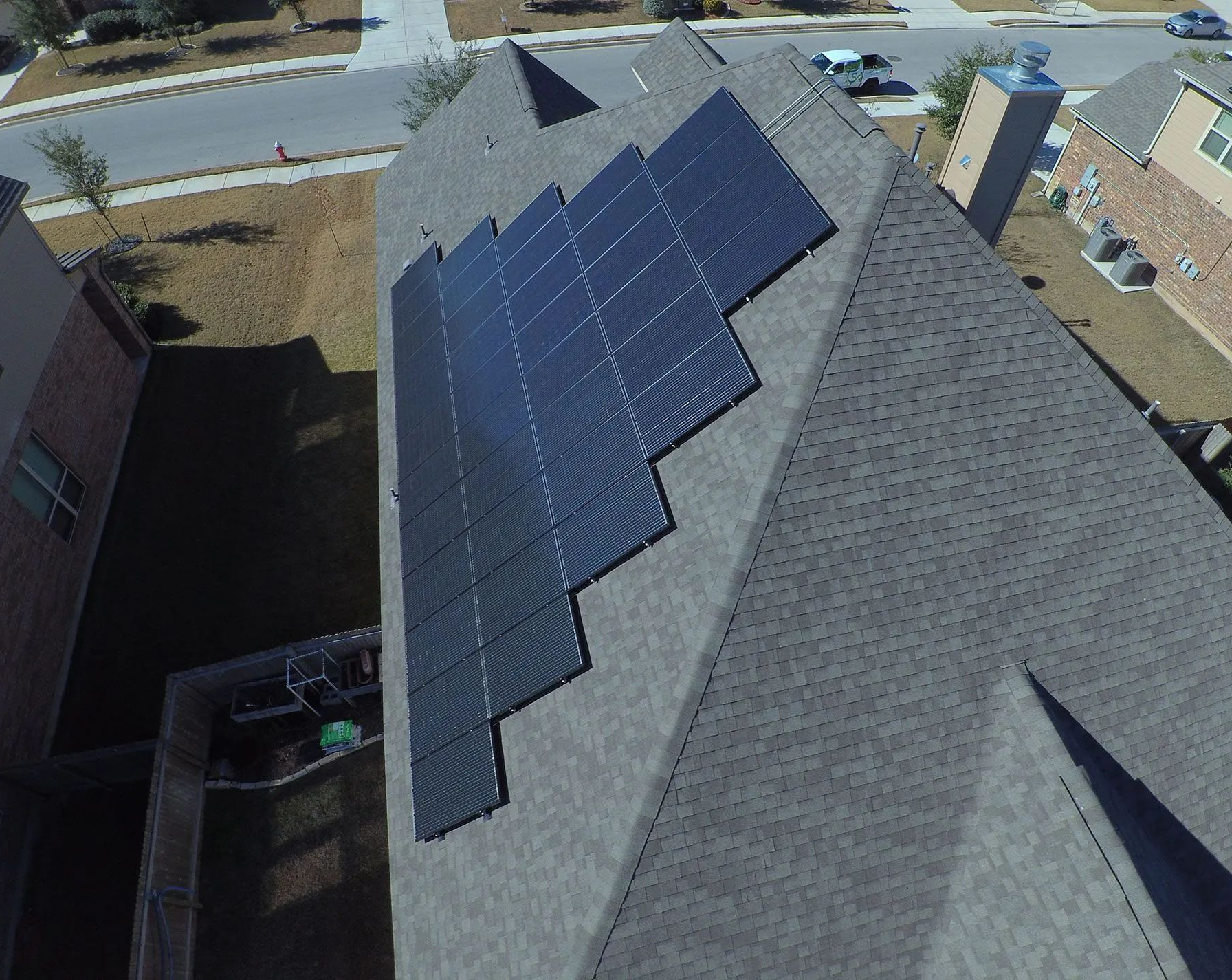
Central Texas has many mature trees that cast moving shade across roofs. Panel level control limits the impact, so shaded panels do not drag down unaffected panels elsewhere during production.
Chimneys, Dormers, And Vents
Older San Antonio neighborhoods often have chimneys, dormers, vents, and skylights that create moving shadows. Panel level monitoring helps identify production dips caused by these obstacles quickly during operation later.
Roof Planes Facing Different Directions
Roofs with east, west, south, or mixed facing planes receive sunlight differently. String systems require careful grouping, while microinverters handle mixed orientations without that planning constraint entirely independently with ease.
Open, Simple Roofs
A large, simple roof with one south facing plane and no nearby trees suits string inverters well. Similar conditions across panels minimize mismatch and simplify system design considerably for installation.
TIP: Before you talk to any installer, walk your property at mid morning, noon, and late afternoon and look at your roof. Note where trees, chimneys, and neighboring buildings cast shade at each time. Those notes help us match the inverter design to your roof, and they often reveal shade that is easy to miss at a single visit.
Heat, Hail, and Where the Electronics Live
Central Texas is hard on equipment. Roof surfaces get very hot in summer, afternoon temperatures climb past 100 degrees often, hail rolls through the region, and the occasional hard freeze arrives in winter. Where the inverter sits changes how it deals with those conditions.
Heat On The Roof
A microinverter lives behind the panel on the roof, which means it shares the hot environment under the array. Quality microinverters are designed and rated for that, and airflow behind the panels helps. Still, the electronics are working in some of the hottest conditions in the system.
Heat At The Wall
A string inverter on a garage wall or shaded side of the house has a milder environment, but it is not immune. A unit mounted on a west wall in direct afternoon sun can run hot and reduce its output to protect itself. Where it is mounted matters as much as which brand it is. A shaded, ventilated location makes a real difference.
Hail
Panels take the direct hit in a hailstorm. A string inverter at ground level is shielded from hail by the structure itself, while microinverters are tucked behind the panels, which also shields them from direct impact. After a storm, a system inspection should look at the panels, the wiring, and the inverter equipment together.
Freezes
A hard freeze is rare here, but it happens, and a system should be built to handle it. Outdoor rated electronics of either type are designed for temperature swings, and the larger concern in a freeze is usually the roof surface and the wiring connections rather than the inverter itself.
Service, Repair, and Peace of Mind
Every system needs attention at some point. How that looks depends on the design.
Diagnosing A String Problem
With string inverters, production drops can originate from panels, connections, or the inverter. Finding the cause requires systematic testing along the string to isolate faults accurately.
Diagnosing A Microinverter Problem
Panel level monitoring can identify which panel is underperforming, directing repairs immediately. However, accessing microinverters typically requires a technician to climb onto the roof for service.
Replacing The Inverter
String inverters require one replacement for the system, while microinverters are replaced individually. Warranty periods vary by manufacturer, so review your specific equipment details carefully before installation.
WARNING: If your solar monitoring shows a panel or an entire system at zero, or an inverter showing a fault light, do not climb on the roof or open any equipment cover yourself. Solar equipment carries dangerous voltage even in daylight, and roofs in summer heat are hazardous. Call a certified technician instead.
Batteries, EV Chargers, and Planning Ahead
Many Central Texas homeowners now think about a battery or an electric vehicle charger, either at installation or later. The inverter you choose today affects how smoothly those additions go.
Battery Storage
Certain batteries pair naturally with specific inverter families. Tesla, Enphase, SolarEdge, Generac, and FranklinWH use different storage connections. Choosing equipment early can simplify future additions, reduce extra equipment, improve backup planning, and avoid compatibility issues.
EV Charging
An electric vehicle adds substantial daily demand to a home. Microinverters make adding panels easier, while string systems can expand within inverter limits. Planning capacity early helps accommodate future charging needs without major system changes.
Roof Work Down The Road
Roofs may need replacement before a solar system reaches the end of its life. Panels and rooftop electronics require careful removal and reinstallation, making long term system planning important from installation onward for future maintenance.
How to Decide for Your Own Roof
No answer fits every house, so here is the way we approach it with homeowners from San Antonio to Kerrville.
Start With Shade
If shade from trees, chimneys, or structures reaches your roof during the day, panel level control deserves serious consideration for better performance.
Look At The Shape
Roofs with multiple planes, mixed directions, or tight sections favor panel level control. Large, simple planes generally suit string inverter designs well.
Think About The Future
If you expect additional panels, batteries, or EV charging, consider flexibility. If your system will remain unchanged, a simpler design may suffice.
Consider Service Access
Think about who will maintain the system and how. Some homeowners prefer ground level electronics, while others value identifying exactly which panel needs attention.
Match Equipment To The Installer
An inverter performs only as well as its installation. Wiring, mounting, ventilation, and monitoring quality all influence long term system performance in challenging climates.
Frequently Asked Questions
Are microinverters better than string inverters?
Neither is better in every situation. Microinverters handle shade, mixed roof angles, and future expansion well. String inverters suit open, simple roofs and keep the main electronics at ground level. Your roof decides the answer.
Will one shaded panel really hurt my whole system?
On a string design without optimizers, it can. Panels in a string share one electrical path, so a shaded panel can pull down the others. With microinverters or optimizers, the loss stays with that panel.
Do microinverters handle Central Texas heat?
Quality microinverters are built and rated for outdoor use, including hot rooftops. They share the heat behind the panels, so mounting height and airflow matter. A well designed installation always accounts for that heat too.
Can I add solar panels to my system later?
Often yes, though ease depends on the design. Microinverter systems usually accept more panels with fewer changes. A string system may have spare inverter capacity or may need extra equipment. Mention future plans before installation.
What happens when an inverter fails?
With a string inverter, the whole system stops producing until the unit is repaired or replaced. With microinverters, only the affected panel stops. Alerts flag it first. Either way, a certified technician should handle repairs.
Does the inverter type affect adding a battery?
It can. Some batteries and inverters are designed to work together, and compatibility affects how simple a battery addition will be. If backup power interests you, raise it early so the design accounts for it.
Choosing the Inverter That Fits Your Roof
The best inverter is the one that fits the roof it will live on. A shaded, multi angle roof under Hill Country oaks asks different things of a system than a wide open south facing roof on a ranch lot. Trouble starts when a design is picked from a brochure instead of from a careful look at the property. Shade, roof shape, future plans, and the service you want to rely on make the decision far clearer than any spec sheet.
Central Texas Solar
has brought 100
years of combined experience to homeowners in San Antonio, TX, and across the Hill Country, and the lesson holds on nearly every roof. Equipment that suits the sun, the heat, and the layout keeps producing quietly through long summers and the occasional hailstorm. Wiring, mounting, ventilation, and monitoring matter as much as the brand on the box. When those pieces are chosen together, the system quietly does its job, and the monthly graph stops being a worry.