Which Solar Panels Hold Up Best in San Antonio Heat
September 30, 2026
QUICK ANSWER: The panels that hold up best in San Antonio heat share three traits: a low temperature coefficient (ideally -0.35%/°C or better), a cell technology built to shed heat instead of trap it, and a test record that includes real hail and thermal-cycling data, not just a sunny-day efficiency number. Monocrystalline and N-type cells generally outperform older polycrystalline designs once roof surface temperatures climb into the 130-150°F range, which happens routinely on Central Texas roofs in July and August. The panel matters, but so does how it's mounted, spaced, and matched to your roof. A panel rated for 22% efficiency in a lab can still underperform if it's racked flush against a hot roof deck with no airflow behind it.
Roof surface temperatures in San Antonio regularly climb past 150°F on a clear July afternoon, long before the air temperature even hits 100. That gap between air temperature and roof temperature is the part most homeowners never think about until their system's production report shows a dip that has nothing to do with dust or shade. Every solar panel is tested and rated at 77°F. Almost none of them ever operate at that temperature once they're bolted to a Texas roof.
That's the real question behind "which panels hold up best in the heat." It isn't about which brand looks best on a spec sheet. It's about which panels lose the least output once real Central Texas conditions take over, and which ones are built to survive the hail, the freeze-thaw swings, and the decades of thermal stress that come with this region.
Why Heat Is the Actual Stress Test, Not Just a Backdrop
Every solar panel carries a rating measured under Standard Test Conditions: 77°F cell temperature, a specific amount of simulated sunlight, and no wind. That number goes on the spec sheet and the sales brochure. It's also close to useless for predicting how a panel behaves on a black asphalt shingle roof in San Antonio in August, where cell temperatures can run 40 to 60 degrees above that lab baseline.
What Actually Happens To The Silicon
As a solar cell heats up, its voltage decreases while current stays relatively stable, reducing overall wattage. This is normal semiconductor behavior affecting every panel. Better hot-climate panels simply lose less output as temperatures rise.
Why This Matters More Here Than Almost Anywhere Else
Central Texas experiences prolonged heat, intense sunlight, and frequent triple-digit afternoons. When panels lose output for hours daily across months, those losses accumulate, reducing total energy production precisely when households typically need the most electricity.
What Temperature Coefficient Actually Tells You
If you're comparing panels for a hot-climate roof, the temperature coefficient is the single most relevant spec on the sheet, and it's also the one most homeowners have never heard of.
The Definition
Temperature coefficient shows how much a panel's power output changes for each degree Celsius above 25°C. A lower negative percentage means less energy is lost as temperatures rise.
What The Range Looks Like In Practice
Most standard panels have temperature coefficients around -0.34%/°C to -0.45%/°C. Better hot-climate panels typically range from -0.24%/°C to -0.30%/°C, improving afternoon performance during Central Texas summers.
Why The Gap Is Bigger Than It Looks On Paper
A small temperature coefficient difference becomes significant across 40 or more degrees of heat. Repeated daily losses throughout summer can substantially affect total system output and real-world performance.
How Cell Technology Changes the Heat Story
Not all solar cells respond to heat the same way, and the underlying technology is a bigger factor than most buyers realize.
Monocrystalline Cells
Made from a single silicon crystal, monocrystalline panels generally offer higher efficiency and better temperature performance. Their uniform structure supports efficient electron movement, helping maintain output as temperatures rise.
Polycrystalline Cells
Made from multiple silicon fragments, polycrystalline panels remain dependable but typically have higher temperature coefficients than monocrystalline options. That difference matters more on roofs facing intense afternoon Central Texas sunlight.
N-Type Cells
N-type cells use a different silicon doping process and can deliver strong heat performance, with some manufacturers reporting coefficients near -0.29%/°C. They also generally degrade more slowly.
Bifacial Designs
Bifacial panels capture sunlight from both sides, potentially increasing production from reflected light. However, gains depend on mounting height and surface reflectivity, making them more valuable for certain installations
A single spec doesn't tell the whole story here. We look at the temperature coefficient alongside the cell technology, the degradation rate, and how the panel has performed in independent third-party testing before we recommend it for a Central Texas roof.
Built to Take a Hit: Hail and Impact Resistance
Heat isn't the only regional stress test a panel faces here. Central Texas sits in an active hail corridor, and any panel installed in this region needs to handle both extremes.
The Industry Standard
Panels certified under IEC 61215 must withstand a 25 mm ice ball traveling 23 meters per second, striking eleven locations. Some manufacturers exceed these requirements with larger hailstones.
What Tempered Glass Actually Does
Quality solar panels use thick tempered glass designed to absorb impact energy without shattering. Combined with aluminum framing and proper racking, this construction helps panels withstand direct hail impacts.
TIP: After any hailstorm large enough to leave visible marks on your gutters, siding, or vehicles, it's worth a visual check of your panels for cracked glass, discoloration, or spots that look different from the rest of the array. Catching a cracked cell early keeps a minor issue from turning into a bigger production problem down the line.
Where hail resistance and heat resistance actually connect
The same IEC testing sequence that measures hail impact also puts panels through 200 cycles of thermal stress, swinging the temperature between -40°F and 185°F to simulate years of expansion and contraction. A panel that's engineered to hold up under that swing is generally a panel that's also engineered to perform consistently through a Central Texas summer, because the underlying materials science, glass quality, cell encapsulation, and frame construction, is largely the same discipline. Panels that skip corners on one tend to skip corners on the other.
The Other Half of the Equation: How a Panel Is Installed
A high-performing panel on paper can still underperform on a roof if the installation doesn't account for how heat actually moves.
Airflow Behind The Array
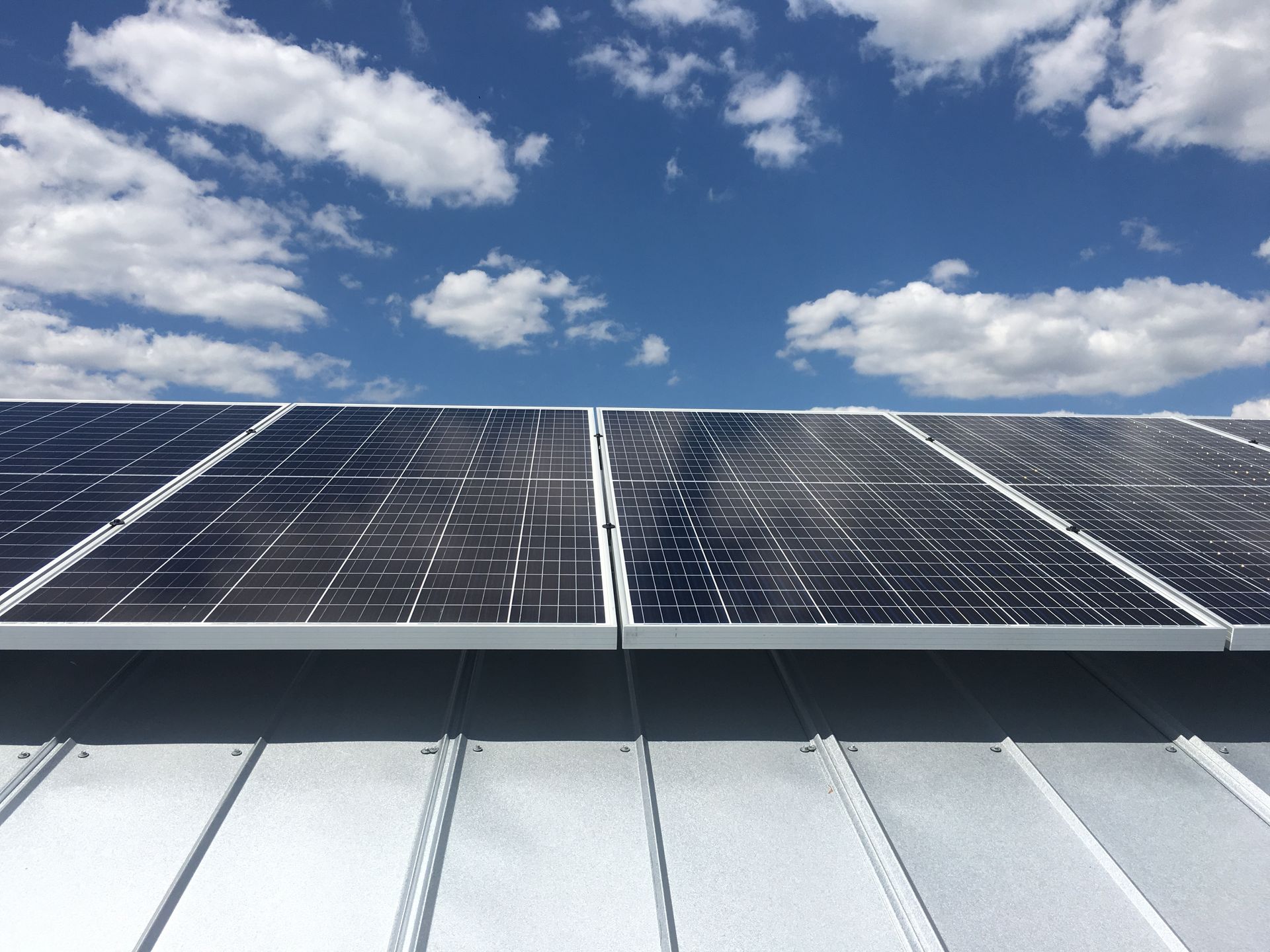
Solar panels mounted above the roof deck stay cooler because airflow carries heat away. Adequate clearance prevents heat buildup, which can meaningfully improve cell temperatures during peak afternoon hours.
Roof Orientation And Exposure
West-facing roof sections receive intense afternoon sunlight when temperatures peak, making low temperature coefficients and airflow especially valuable. Shaded or north-facing sections experience different conditions requiring potentially different layouts.
Layout And Spacing Decisions
Panel arrangement, spacing, and ventilation are determined before installation. Mapping roof orientation, shading, and sun exposure helps create a suitable layout rather than applying identical equipment everywhere.
WARNING: Not every panel marketed as "high efficiency" has actually been tested for sustained heat exposure. Some panels post strong numbers in a cool lab setting but were never engineered with a hot-climate temperature coefficient in mind. Reviewing the actual spec sheet, not just the marketing efficiency percentage, is the only way to know how a specific panel will behave once it's baking on a San Antonio roof through August.
What Changes When the Temperature Swings the Other Way
Central Texas heat gets most of the attention, but the occasional hard freeze is part of this region's story too, and it puts a different kind of stress on the same equipment.
A panel that expands and contracts through 200-plus-degree swings during testing is built to handle both directions of that stress, not just the hot end. When a winter cold snap moves through and temperatures drop sharply overnight, the same glass, frame, and cell encapsulation that shrugged off a summer heat wave are working to prevent micro-cracking from the sudden contraction. Panels that were only ever engineered with mild climates in mind are more likely to show wear from this kind of freeze-thaw cycling over a decade or two of Central Texas weather. This is one more reason the underlying build quality of a panel matters more here than in a climate with milder, more stable year-round temperatures.
How to Actually Evaluate a Panel Recommendation for Your Roof
Once you understand what's driving panel performance in this climate, evaluating a recommendation gets a lot more concrete. Start by asking for the temperature coefficient, not just the headline efficiency percentage. Ask which cell technology the panel uses and how it compares to the alternatives being considered for your specific roof. Ask what independent testing the panel has gone through for hail and thermal cycling, and whether that testing exceeded the baseline standard or simply met it.
Then look past the panel itself. Ask how the mounting and racking plan accounts for airflow on the sections of your roof that see the most direct afternoon sun. A single number on a spec sheet never tells the full story of how a system will perform after five Central Texas summers. The combination of cell technology, testing record, and installation approach is what actually determines whether a system keeps producing close to its rated output a decade in, or quietly loses ground every August without anyone noticing until the production report shows it.
Frequently Asked Questions
Does a higher efficiency rating always mean better heat performance?
No. Efficiency and temperature coefficient are two different measurements. A panel can post high efficiency under lab conditions and still lose more output in real heat than a slightly less efficient one.
How much power does a solar panel actually lose in extreme heat?
It depends on the panel's temperature coefficient and how far above 77°F the cells get. On a Central Texas roof, that loss compounds across an entire afternoon significantly.
Are darker-colored or all-black panels a problem in this climate?
All-black panels run somewhat hotter than white-backsheet panels since darker surfaces absorb more heat. Even so, the difference is generally smaller than that between different temperature coefficients or cell technologies.
Can hail damage still void a panel's performance even if the glass doesn't crack?
It's possible. A hard hail strike can occasionally cause micro-fractures in a cell that aren't visible but still affect output, which is why post-storm inspection matters.
Do older panels on an existing system perform worse in the heat than newer ones?
Often, yes, simply because panel technology and temperature coefficients have improved over the past decade, separate from any normal age-related degradation occurring alongside it.
Is one specific brand always the right choice for a hot Central Texas roof?
No single brand is automatically right for every roof. Comparing temperature coefficient, cell technology, and testing data against your specific roof's exposure matters more.
What Actually Determines Long-Term Output
A panel's real performance in San Antonio has less to do with its headline efficiency number and more to do with temperature coefficient, cell technology, and how it's actually mounted on the roof. Two panels can post nearly identical numbers in a cool lab and behave very differently once cell temperatures climb 40 to 60 degrees above that baseline through a Central Texas summer. The panels that hold up best combine a low temperature coefficient with real hail and thermal-cycling data, not just a strong spec sheet.
Central Texas Solar
brings 100
years of combined experience to matching panel technology with how a specific roof actually performs across San Antonio, TX, walking each property to map sun exposure and shading before recommending equipment. That approach is what separates a system that keeps producing close to its rated output a decade in from one that quietly loses ground every August. Getting the roof-specific details right up front is what protects the investment through every summer that follows.